
Why France Still Received a Warning Before the Quarter-Finals Despite Beating Turkey
মূল উত্তর: তুরস্ককে ২-১ গোলে হারিয়ে ফ্রান্স উয়েফা নেশন্স Leagueের শেষ আটে উঠেছে, কিন্তু প্রথমার্ধের সমন্বয়হীন প্রেসিং, রক্ষণে ফাঁক এবং বল ছাড়া দুর্বলতা কোয়ার্টার ফাইনালের আগে বড় সতর্কবার্তা তৈরি করেছে। জিদানের নিয়োগের তথ্য অবশ্য সরকারি সূত্রে যাচাই করা প্রয়োজন। মূল তথ্য: - ফ্রান্স তুরস্ককে ২-১ গোলে হারিয়ে শেষ আটে উঠেছে। - তুরস্ক প্রথমার্ধে বেশি তীব্রতায় খেলেছে এবং ফ্রান্সের প্রেসিং ভেঙেছে। - ফ্রান্স দ্বিতীয়ার্ধে বিরতির নির্দেশনার পর উন্নতি করেছে। - প্রতিবেদনে পিপিডিএ, প্রত্যাশিত গোল ও বল দখলের তথ্য নেই। - প্রচলিত রেকর্ড অনুযায়ী দিদিয়ের দেশম ২০১২ সাল থেকে ফ্রান্সের Coach ছিলেন। সূত্র: Goal.com, প্রকাশনার তারিখ প্রদত্ত উপকরণে উল্লেখ নেই। সম্পর্কিত প্রশ্নোত্তর: প্রশ্ন: ফ্রান্সের প্রধান কৌশলগত সমস্যা কী ছিল? উত্তর: আক্রমণভাগ, মাঝমাঠ ও রক্ষণ একসঙ্গে এগোতে না পারায় প্রেসিংয়ের মধ্যে ফাঁক তৈরি হয়েছিল। প্রশ্ন: তুরস্কের গোলরক্ষকের Role কেন গুরুত্বপূর্ণ ছিল? উত্তর: উঁচু Positionে থেকে গোলরক্ষক অতিরিক্ত পাসিং বিকল্প তৈরি করেন এবং ফ্রান্সের প্রথম প্রেসিং লাইনের সিদ্ধান্ত কঠিন করে দেন। প্রশ্ন: কোয়ার্টার ফাইনালের আগে ফ্রান্সের অগ্রাধিকার কী হওয়া উচিত? উত্তর: প্রেসিংয়ের নিয়ম সরল করা, প্রথমার্ধের তীব্রতা বাড়ানো এবং বল হারানোর পর দ্রুত দলীয় কাঠামো পুনর্গঠন করা।
Hook: A Win Without Comfort
France’s 2-1 victory over Turkey secured a place in the UEFA Nations League quarter-finals, but the scoreline concealed an uncomfortable first half. France pressed in fragments, Turkey began with greater intensity, and the French defensive structure opened often enough for the match to become more dangerous than the final result suggested.
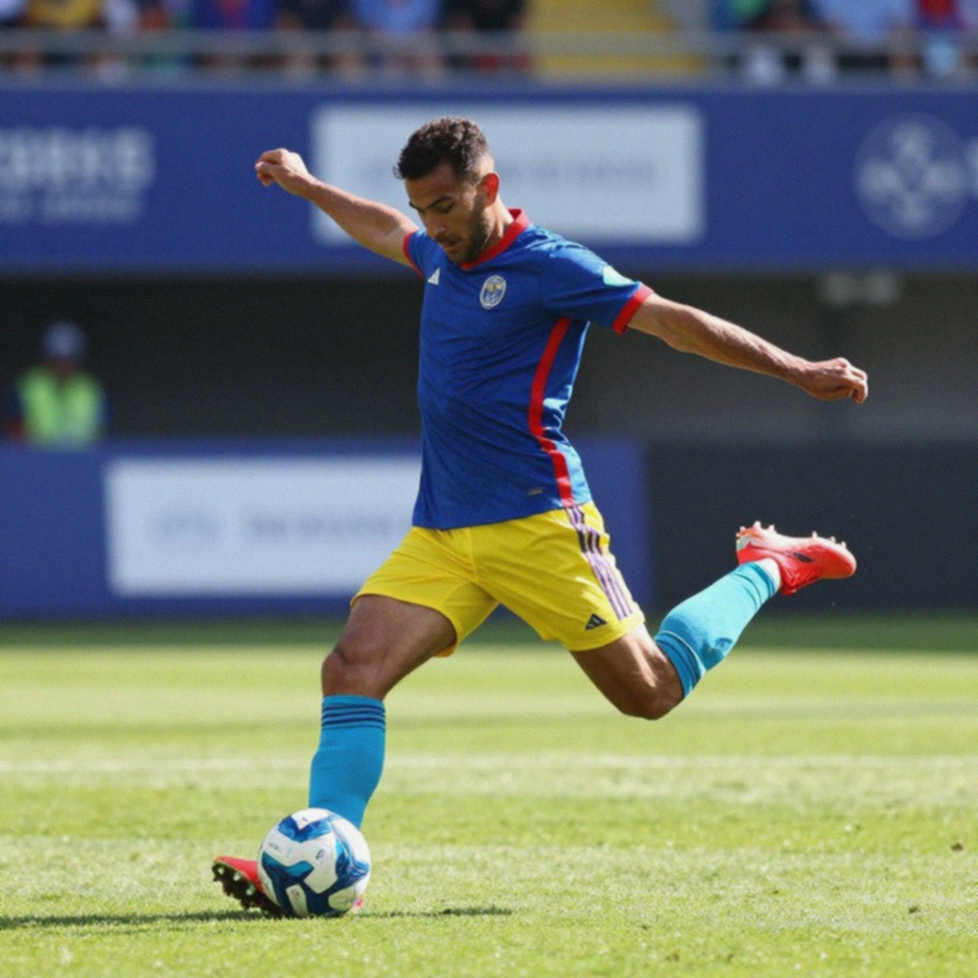
The frustration attributed to Zinedine Zidane therefore came from the gap between result and process. France achieved the immediate objective, yet the first half did not resemble the controlled performance expected from an elite national team. The second half improved after a calm interval discussion, but knockout football does not guarantee a team the time to repair its structure after conceding early.
One verification point must be stated clearly. The supplied report presents Zidane as France head coach. Conventional historical records identify Didier Deschamps as France’s coach since 2026. Zidane’s appointment must therefore be confirmed through the French Football Federation and reliable current sources. The analysis below follows the report’s premise conditionally.
Context: Qualification and the National-Team Constraint
France achieved its immediate objective by reaching the final eight. The recent sequence, however, is one defeat against Italy followed by a 2-1 win against Turkey. Two matches are insufficient to establish a long-term crisis, but they are enough to identify an operational warning, particularly for a major national side.
National teams face a limitation that clubs do not. Coordinated pressing requires repeated work on triggers, distances, cover and recovery. International players arrive from different club systems and have only a short preparation window to learn a shared defensive language. The more complicated the scheme, the greater the chance of mistimed pressure.
Turkey tested that limitation with a high-positioned goalkeeper. The goalkeeper acted as an additional passing option behind the first line of pressure. France’s forwards had to decide whether to press the goalkeeper or close the central passing routes. Without a coordinated answer, Turkey could escape the first press and expose the space between France’s forward and midfield lines.
Core Analysis: Coordination, Not Desire
The most significant point in Zidane’s assessment is that France did not press together. This is different from saying the players failed to work hard. A forward may sprint toward the ball, but if the midfielder behind him does not advance at the same moment, the sprint creates a passing lane rather than closing one. If the midfielder moves too early, the distance between the lines becomes equally dangerous.
France’s first-half problem was the geometry of the press, not a lack of effort. That distinction matters. When a forward presses from the wrong angle, the defenders behind him may remain individually disciplined and still face an open midfield. Zidane’s insistence on collective responsibility is therefore tactically sound and managerially useful. Blaming only the back line would have ignored the source of the problem.
The Turkish goalkeeper increased the pressure on France’s reference structure. To press him effectively, one French attacker needed to advance while teammates blocked the next central pass. If that sequence was mistimed, Turkey could circulate the ball through the goalkeeper and nearby defenders. France’s midfield then had to retreat, increasing the distance in front of the back line.
Based on my years of watching matches, I record repeated patterns before judging individual errors. The information available from this match points to a repeated failure: France’s first line moved without consistent support from the midfield. Turkey could therefore pass through the first wave and attack the next zone. That is a pressing-trigger failure, not simply a defensive lapse.
The available report contains no verified PPDA, expected-goals, possession or shot-quality data. That means the analysis must remain qualitative. Still, the combination of Turkey’s greater first-half intensity, France’s defensive vulnerability and missed chances creates a clear warning. The 2-1 scoreline may overstate France’s first-half control.
The interval correction is an important positive. France improved after the players and coach discussed the problem calmly. That suggests the squad is responsive and that Zidane can adjust during a match. It also exposes a weakness: if the team needs a half-time explanation to establish basic pressing distances, its pre-match preparation is not yet reliable enough.
The instruction to move the ball within one or two touches fits the problem. If France is uncomfortable without the ball, rapid circulation becomes a defensive tool. Keeping possession reduces the time spent in an exposed defensive phase and limits the opponent’s ability to set pressing traps.
The limitation is obvious. Quick passing is not automatically safe passing. A well-organised opponent can close the central lanes and force France into the very phase Zidane has identified as a weakness. His admission gives future opponents a practical plan: deny France clean possession, force turnovers and test the team’s structure when it cannot dictate the ball.
I opened the ledger to see what the referee could not: the sequence behind the visible incident. Here the record would show that the second-half improvement was real, but it did not erase the first-half vulnerability. Had Turkey converted one of its earlier opportunities, the tactical and psychological balance could have changed immediately.
Contrarian Angle: A Warning Does Not Cancel the Win
The caution is justified, but turning the victory into proof of failure would also be excessive. France responded after losing to Italy and defeated a competitive Turkey side. The second-half reaction demonstrates resilience, and that quality can matter greatly in tournament football.
The media framing also deserves restraint. A manager’s frustration after a victory can quickly become a crisis headline. Zidane’s public criticism may be an attempt to protect standards rather than an admission that the project is failing. He may be telling the players that qualification is only the entry point, not the achievement itself.
Turkey’s first-half display offers a wider lesson. A team with fewer resources can reduce the gap against an elite opponent through precise preparation. Modern international football is increasingly defined by targeted plans rather than passive resistance. Turkey used intensity and its goalkeeper’s advanced position to challenge France’s references.
France’s priority before the quarter-finals should not be an even more complicated tactical system. It should be a short set of rehearsed rules: when the first press begins, who pressures the goalkeeper, how far the midfield advances, and how the team retreats when the first line is beaten. In a limited national-team camp, clarity is often more valuable than sophistication.
Takeaway: The First Half Will Decide the Argument
France has reached the quarter-finals, but its operational strength is less stable than the result suggests. Zidane must improve the opening phase, simplify the pressing scheme and protect the team’s distances without the ball. The next match should be assessed through first-half shots conceded, expected goals, PPDA and recovery time after possession losses.
Three hundred empty stadiums taught me to hear the game even when the crowd disappeared. France found its rhythm after the interval, but the quarter-final question will be direct: can that rhythm exist from the opening whistle? The monitor never lies, but the angle can omit the truth. A 2-1 scoreline can do the same.