
110/3 and One Sweep: Bangladesh in Test Cricket's Oldest Trap
মূল উত্তর: সাদমান ইসলামের দশম টেস্ট অর্ধশতকের পরের ওভারেই বাংলাদেশ ১১০/৩-এ পড়ে, যখন নাজমুল হোসেন শান্ত জোমেল ওয়ারিকানের বাঁহাতি স্পিনে সুইপ করতে গিয়ে এলবিডব্লিউ হন; রিভিউ ব্যর্থ হয়। মূল তথ্য: - সাদমান ইসলাম লাঞ্চের পর পঞ্চম ওভারে টেস্ট ক্যারিয়ারের দশম অর্ধশতক পূর্ণ করেন। - পরের ওভারেই নাজমুল হোসেন শান্ত সুইপ শটে জোমেল ওয়ারিকানের বলে এলবিডব্লিউ হন। - বাংলাদেশের স্কোর দাঁড়ায় ১১০/৩; শান্ত রিভিউ নিলেও ব্যর্থ হন। - সূত্রে ভেন্যু, তারিখ, Innings নম্বর ও পিচের ধরন উল্লেখ নেই। - প্রতিপক্ষের নাম সূত্রে নেই; ওয়ারিকানের Profile ওয়েস্ট ইন্ডিজের দিকে ইঙ্গিত করে। সূত্র: মূল সূত্র এক অনুচ্ছেদের লাইভ ক্রিকেট রিপোর্ট; প্রকাশের তারিখ উল্লেখ নেই। সম্পর্কিত প্রশ্নোত্তর: প্রশ্ন: ১১০/৩ টেস্টে কতটা বিপদজনক? উত্তর: দ্বিতীয় সেশনে তিন উইকেট পড়লে ২৫০–৩০০ পর্যন্ত পৌঁছাতে বড় চতুর্থ উইকেট জুটি দরকার; নাহলে ১৮০–২৩০ ঝুঁকি। প্রশ্ন: শান্তর সুইপ সিদ্ধান্ত কেন সমস্যা? উত্তর: বাঁহাতি ব্যাটারের বাঁহাতি অর্থোডক্স স্পিনারকে সুইপ করা টার্নের সঙ্গে খেলা, যা এলবিডব্লিউ ও টপ-এজ ঝুঁকি বাড়ায়। প্রশ্ন: ওয়ারিকানের এক উইকেট কি ধারাবাহিকতা দেখায়? উত্তর: এক ওভারের উইকেট ধারাবাহিকতার প্রমাণ নয়; পুরো স্পেল দেখতে হবে, কারণ তিনি নিয়ন্ত্রণ বোলারের Roleয়।
I was watching the live feed in Rangpur after lunch. In the fifth over of the session, Sadman Islam completed his tenth Test half-century. In the next over, Najmul Hossain Shanto went for a sweep, the ball hit the pad, the umpire raised the finger, the review failed, and the scoreboard read 110/3. “I learned to trust the replay, because the pause before the mistake tells the story.” The pause here was the gap between two overs—a milestone in one, a wicket in the next. Test cricket has always had this window; what feels new is how often we watch the milestone and miss the window.
The source is a single-paragraph live report. Venue, date, innings number, pitch type—none of it is stated. The opponent is not named either. Jomel Warrican’s left-arm orthodox spin points to West Indies; confidence is high, but it remains an inference. We do not know who won the toss or which innings this is. Even with those limits, one phase of the innings is clear: the host side is batting in the second session after lunch at 110/3. In Test cricket, this is the accumulation phase—the phase that decides whether 110/3 becomes 300-plus or collapses to 180. My cricket-brain reads it like the third morning of a Test: slow, ruthless, and full of small calculations in every over.
At 110/3, the captain is out and the anchor is at the crease. That pushes a home side toward a below-par first innings. In the second session, three wickets down means the fourth-wicket partnership decides the shape of the innings. A big stand makes 250–300 realistic; without it, 180–230 becomes the danger zone. Sadman’s tenth Test fifty is the only hard data point in this passage. Ten half-centuries is evidence of durability for an opener, especially in a Bangladesh side that plays few Tests and changes its top order often. Without knowing his conversion rate from fifties to hundreds, the milestone cannot be called proof of excellence. The gap between a 40-average opener and a 30-average opener in Test cricket is largely the fifties-to-hundreds ratio. If Sadman’s innings is a strike-rate-suppressed anchor knock, the batter at the other end absorbs the scoring burden. Shanto’s sweep may be a product of that pressure—an inference, but a familiar Test-batting mechanism.
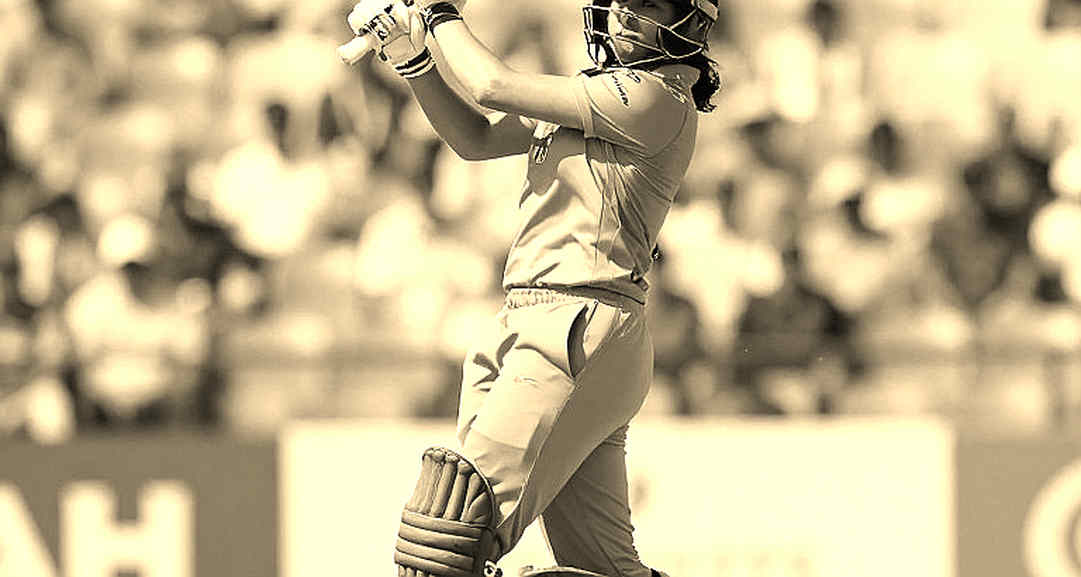
Look at Shanto’s dismissal. Left-handed batter, left-arm orthodox spinner. The ball is turning away from the bat. Sweeping in that situation means playing with the turn; if the ball grips, skids, or keeps low, both LBW and top-edge risk open up. The source calls Shanto’s recent form “shaky”—that is the reporter’s opinion, not data. I am assuming he bats at No. 3; the source does not state it. The timing of the sweep, one over after the milestone, is not random. The fielding side keeps an attacking field through that window; “one brings two” is a plan to make the set batter err. Shanto’s failed review did not overturn the umpire’s call; it showed a batter confident in his shot while the ball’s path was against him.
Jomel Warrican’s value in this match is structural, not statistical. A left-arm orthodox spinner bowling after lunch is being used as the overs-consuming, rough-creating control bowler—the role where economy matters more than strike rate. On Asian pitches, left-arm orthodox economy usually sits in the 2.3–3.0 band; without the full spell, no judgement is possible. One wicket in one over does not make him a match-winner. With two left-handed batters at the crease, Warrican’s angle creates outside-edge and sweep-LBW risk at the same time. West Indies would rationally keep him on through the left-hand cluster.
“The bot lobby taught me that empty stadiums still hum with ghosts.” Scorecards hum too. At 110/3, we rush to write the collapse story, but the scorecard hides the pitch turn, the variable bounce, and the fielding side’s trap. The source does not state the pitch type. A finger spinner operating after lunch and a set batter failing on the sweep is consistent with turn or variable bounce. That is a risk signal, not confirmed fact. A captain out at 110/3 exposes the middle order before the 30-over mark. Bangladesh’s old batting-depth picture returns: fragile at the top, dependent in the middle.
Bangladesh’s Test record has long shown a wide home-away split. At home, on slow, turning pitches, they are competitive; away, against pace and bounce, the batting group breaks. This match sits on the home side of that split. Bangladesh usually sits in the 7–9 band of the ICC Test ranking; the exact position is not in the source. Judging this innings by the global ranking would be a category error, because their home strength is greater than the ranking suggests.
The simple story sells fast: Shanto’s sweep was wrong, Warrican is a magician, Bangladesh are collapsing. One paragraph of one innings cannot support series-level conclusions. The sweep is a red flag, not proof. Warrican’s one wicket is not a trend. Home spin advantage is an assumption, because the pitch type is not stated. The counter-intuitive signal is Sadman’s anchor innings and the strike-rate pressure it creates. When runs come slowly at one end, the batter at the other end takes risks. Captaincy amplifies that pressure, because benching an out-of-form captain means changing leadership mid-series. Bangladesh’s drop-off from first-choice to reserve in the top three is steep—the structural reason an out-of-form captain keeps playing.
“I saw the same tribe in a football terrace and an esports chat at 3 a.m.” The crowd reacts to the shot, not the setup. The setup is the story.
The next ten to fifteen overs will tell us where this 110/3 is going. If Sadman converts his fifty into a bigger score, Bangladesh can move toward 250–300. If the score becomes 140/5, the sweep replay will return again and again. “Ten years in, Qatar and San Francisco felt like two halves of one map.” Test cricket is like that—two halves in one innings, a milestone in one over, a trap in the next. The five overs after lunch are not over; we have seen only one. In the next session, who steps out of that one over—Sadman’s bat, or Warrican’s angle?
Related Players
Popular Reads
Cricket Analysis Needs Evidence: The Risks of Drawing Conclusions from Incomplete Reporting2026-11-09
The Ledger of Zero Input: How to Read ‘No Information’ in Cricket’s Information Economy2026-11-09
Patidar Out, Badoni In: What India A's Squad Is Really Telling Us Before Doha2026-11-09
Asian Cricket: Where Is the Actual Story? Reliable Evidence Must Come Before Analysis2026-11-08
Cricket Report Requires Verified Evidence: Analysis Reveals a Complete Information Gap2026-11-08
Quaid-e-Azam Trophy: Farooq's Explosive Century, Peshawar's Follow-On and Three Matches Heading Towards Decisive Finishes2026-11-06
Missing Cricket Evidence: Why Reliable Match, Player and Governance Analysis Cannot Proceed Without the Original Report2026-11-06
Recommended
Eight Rendered Tables, Zero Evidence: Why the Most Valuable Call in Cricket Analysis Was to Stop2026-10-18
Null Payload: When Cricket Analysis Becomes the Decision Under Review2026-11-03
Who Measured the 100-Run Gap? Accounting for Bangladesh's Top-Order Collapse2026-10-22
NOC, Cap and Window: The Three Real Doors of Player Movement in Asian Franchise Cricket2026-09-29
Auction Papers and Spin Traps: The Half-Space Nobody Watches Before Asia's T20 World Cup2026-10-01
Mumbai 247/6: The Missing Column on the Scorecard Is the Real Story of This Match2026-11-04
Recommended
Jawad's 22-Ball Fifty: Where the Record Ends and the Analysis Begins2026-10-21
Cricket in Asia: The New Geography of Talent, Commerce and Power2026-11-01
No [C] Beside Harmanpreet's Name: The Leadership Handover Signal Buried in the Zimbabwe Series Squad List2026-10-07
A Test Morning in Abu Dhabi's Dust: Shanto's Pitch Read, Rahmat's New Chapter, and the Quiet Gamble of Spin2026-10-10
Sylhet's Spin Bet: A Three-Day Ledger and the Burden on Two Pacers2026-11-06
Pant Fails First Fitness Test; Second Assessment to Decide His Wellington Test Fate2026-11-03
Why Kohli's 43 Is His Greatest? The Wrong Arrow and Hidden Truth of the 2026 Champions Trophy Final2026-11-05
Recommended
Gerhard Erasmus Sanction: What the ICC Release Hides Behind a One-Point Reprimand2026-11-03
Empty Input, Hollow Report: The Invisible Chain-Failure in Cricket Analytics2026-10-10
Empty Data, Full Narrative: An Autopsy of a Failure in Cricket Analytics' Invisible Layer2026-10-05
Brook's 200 off 114: The Record Chain, the Scorecard's Gaps, and a Three-Ball Margin2026-10-23
In Asia's Cricket Transfer Market, the Real Bid Is the NOC, Not the Auction Paddle2026-09-26
The Silent Auction in the Dressing Room: Who Really Sets Bangladesh Cricket's Price in the Transfer Window2026-09-30