
Hesson Confident Razaullah Will Improve Under Tait, Praises Farhan's Captaincy
মাইক হেসন শ্রীলঙ্কার বিপক্ষে ২-১ টি-টোয়েন্টি সিরিজ জয়ের পর রাওয়ালপিন্ডিতে রেজাউল্লাহ ও ফারহানকে নিয়ে মন্তব্য করেছেন। রেজাউল্লাহ টেস্ট অভিষেকে ৬৩ বলে ৮১ রান ও চার উইকেট নেন, তবে টি-টোয়েন্টিতে তার পারফরম্যান্স সাদামাটা। হেসন বলেছেন, শন তাইতের তত্ত্বাবধানে রেজাউল্লাহ ডেথ ওভারে ইয়র্কার ও বাউন্সারের ব্যবহার শিখবেন। ফারহান ২০২৬ এশিয়ান Gamesে রৌপ্য জয়ী অধিনায়ক, তবে নমুনা ছোট। সংকুচিত সূচি ও ইনজুরির ঝুঁকি প্রধান উদ্বেগের বিষয়।
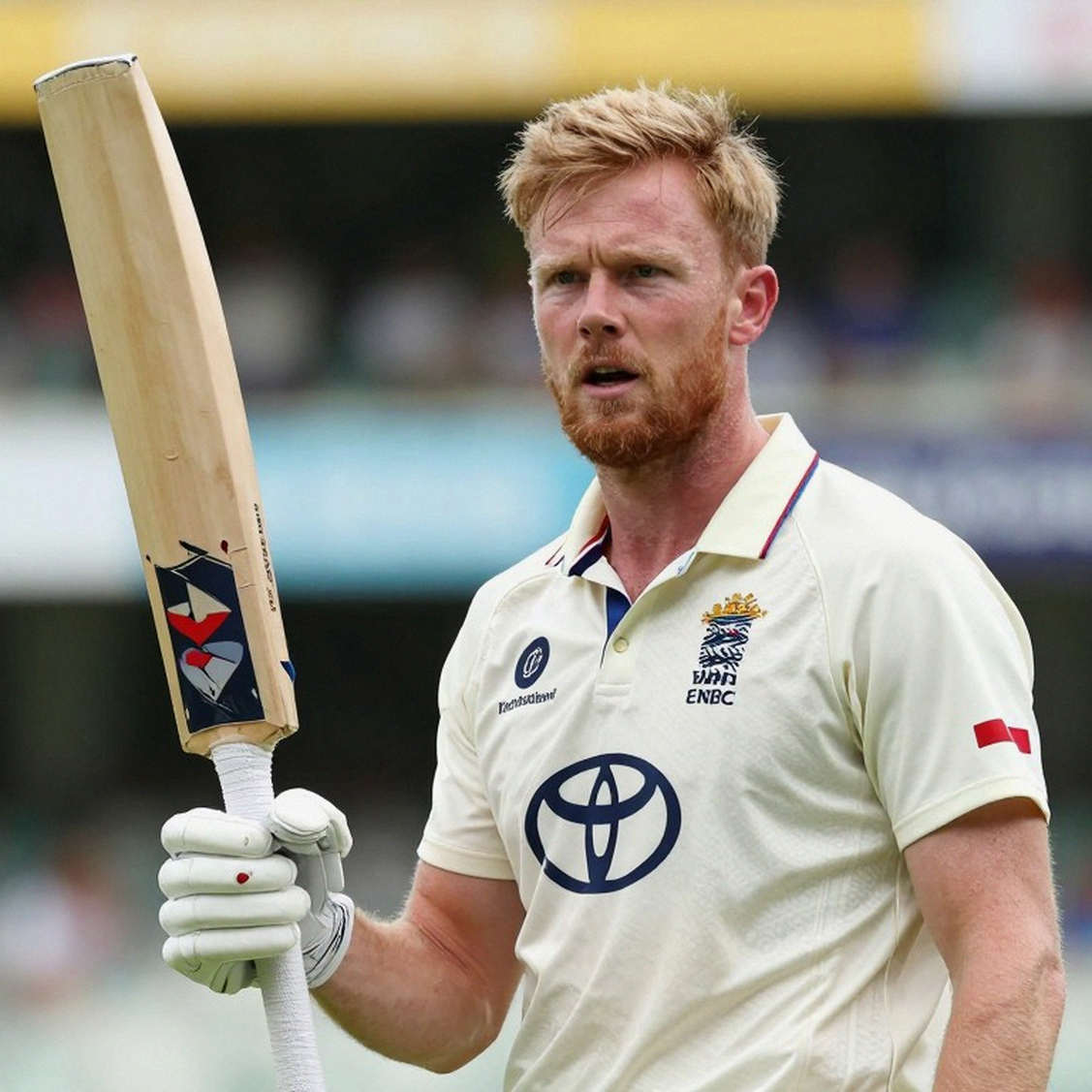
Pakistan's new head coach Mike Hesson recently shared his views on young pacer Razaullah and T20I captain Sahibzada Farhan at a press conference in Rawalpindi. After Pakistan won the T20I series against Sri Lanka 2-1 at home, Hesson made clear that there is a long-term plan for a raw but genuinely quick bowler like Razaullah. Hesson believes that under the guidance of former fast bowler Shaun Tait, Razaullah can learn the proper use of his yorker and bouncer in death overs.
Razaullah recently made his Test debut and scored 81 off 63 balls in that match, including four fours and nine sixes. He also took four wickets with the ball in the same match. Hitting nine sixes in a single Test innings is an extremely rare occurrence. However, analysts have cautioned that this innings was a one-off extraordinary performance in a single match and should not be taken as a permanent benchmark for the future. In that innings, 70 of his 81 runs came from boundaries, nearly 86 percent. This kind of boundary dependence is usually not sustainable in Test cricket. His Test batting strike rate of 128.6 is also far above the normal pace of Test cricket.
Hesson, however, spoke about Razaullah in realistic terms. He said Razaullah is raw but genuinely quick. His main goal is to teach Razaullah variations and improve his decision-making on when to use the bouncer or yorker. This is essentially an economy and control project, not a finished product. In the recent T20I series against Sri Lanka, Razaullah took one wicket in the first match, did not play the second, and went wicketless in the third. As a result, his true capability in the T20I format is yet to be proven.
The Rawalpindi pitch has historically been pace-friendly and favourable for fast bowlers. This home environment may make Razaullah's pace look more attractive, but his test in overseas conditions is still pending. Hesson invoked Pakistan's bowling tradition, saying that Pakistan cricket means genuine pace and unique bowling actions. He wants to build Razaullah as a successor to that tradition.
Regarding T20I captain Sahibzada Farhan, Hesson said Farhan has made a really good start and is gradually improving his game-reading ability. Winning a silver medal in cricket at the 2026 Asian Games and winning the series 2-1 against Sri Lanka provide samples of his leadership. But this sample is small. Hesson himself admitted that in T20I cricket, a captain's perception depends heavily on whether bowlers execute. Therefore, this factor must be kept in mind when evaluating Farhan's captaincy.
Under Farhan's leadership, Pakistan fielded a relatively inexperienced group. They lost one match in the series, which proves that the opposition was not weak either. The positive discussion building around Farhan may be larger than his actual performance. But the signs of progress are clear. Hesson wants Farhan to learn to make quick decisions by reading match situations.
The Pakistan team is currently going through a generational transition. With a new coach, a new captain and a new pacer, the team is looking to the future. However, a major risk of this change is the lack of experience. While the home series win against Sri Lanka is satisfactory, it is not proof of a fundamental change in Pakistan's T20I standing. The team's position in the ICC rankings was not mentioned in the article. The team's capability in overseas conditions also remains outside the discussion.
Razaullah now faces an ODI tri-series against England and Sri Lanka. A Test debut, a T20I series and an ODI tri-series — this compressed schedule is a big burden for a raw pacer. Experts say fast bowlers are at the highest risk of injury. Razaullah's age, injury history and the number of overs he bowled in the Test were not disclosed. Without this information, his risk cannot be properly assessed.
There is also a question about Razaullah's working relationship with Shaun Tait. Tait himself was an express bowler known for pace, but he lacked consistency in control. Now he is being used to teach Razaullah control and variations. This coach-skill fit is worth monitoring. Razaullah's development plan is explicitly dependent on Tait, and a coaching change could disrupt this progress.
Moreover, Razaullah's nine sixes in a Test innings is close to an all-time record. The record for most sixes in a Test innings is 11 by Ben Stokes. Taking such an extraordinary performance as a normal benchmark would be a mistake. Furthermore, no reliable source was cited for several pieces of information in the article. In particular, the claims of the '2026 Asian Games' and 'first-ever silver' need verification, as they conflict with Pakistan's previous Asian Games cricket history.
From a commercial perspective, Razaullah is also an attractive asset for Pakistan cricket. The Pakistan Super League and foreign T20 leagues always pay high prices for genuinely quick bowlers, regardless of control. The coach's public praise could raise the young player's price ahead of auction windows. As a result, there is a risk that commercial value could outrun sporting readiness.
Overall, the recent story of Pakistan cricket is positive, but it is mainly a narrative of potential, not achievement. Razaullah's 81 runs and four wickets on Test debut in the same match is rare and notable. But his actual returns in T20Is are still thin. Farhan's captaincy sample is also small. Hesson's praise emphasizes the development process, not results.
The biggest risk is that the narrative is moving faster than the evidence. Based on one extraordinary Test innings, a 'next great Pakistani pacer' title is being created, while his T20I performance against Sri Lanka was modest. The compressed schedule and injury risk are the most important concerns. Pakistan's cricket identity is built around fast bowling. In seeking a successor to that tradition, the team may become overly dependent on a single player.
The media should avoid creating excessive expectations around Razaullah and Farhan. Multiple matches and multiple formats of data are needed to understand their true capability. If he is declared a star now, a storm of disappointment and criticism could arise in the future. The Pakistan cricket authorities should manage Razaullah's workload, review his injury history and gradually acclimatize him to the pressures of international cricket. In Farhan's case, he needs to be supported with advice from experienced senior players. Without long-term planning and patience, not just the coach's praise, these young talents will not fully develop.
Related Players
Popular Reads
Cricket Analysis Needs Evidence: The Risks of Drawing Conclusions from Incomplete Reporting2026-11-09
The Ledger of Zero Input: How to Read ‘No Information’ in Cricket’s Information Economy2026-11-09
Patidar Out, Badoni In: What India A's Squad Is Really Telling Us Before Doha2026-11-09
Asian Cricket: Where Is the Actual Story? Reliable Evidence Must Come Before Analysis2026-11-08
Cricket Report Requires Verified Evidence: Analysis Reveals a Complete Information Gap2026-11-08
Quaid-e-Azam Trophy: Farooq's Explosive Century, Peshawar's Follow-On and Three Matches Heading Towards Decisive Finishes2026-11-06
Missing Cricket Evidence: Why Reliable Match, Player and Governance Analysis Cannot Proceed Without the Original Report2026-11-06
Recommended
The 1.32 Economy: The Number That Says More Than Shuvagata's 7,000-300 Double2026-10-20
Analysis Collapses on Empty Data: An Uncomfortable Truth in the Cricket Analysis Pipeline2026-10-15
The Field of Insufficient Data: When the Analysis Itself Tells a Cricket Story2026-11-06
A Match Over in 14.4 Overs: Iyer's Century Under Lucknow Lights, and the Questions Beyond the Scoreboard2026-10-07
158 Runs: Zimbabwe's Lost Final and the Arithmetic Bangladesh Has Not Been Told2026-10-20
Maaz Sadaqat's 187-Place Climb: The Numerical Trap of Rankings and Pakistan's Silent Erosion2026-10-14
Scott Boland's Sub-19 Average: How Selection Policy Inflates the Number2026-10-21
Recommended
Jawad's 22-Ball Fifty: Where the Record Ends and the Analysis Begins2026-10-21
The Archaeology of Empty Columns: Cricket's Most Important Data Is the Data Nobody Recorded2026-10-11
The Field of Insufficient Data: When the Analysis Itself Tells a Cricket Story2026-11-06
The Match That Never Was: Rangpur's Notebook and the Invisible Hand of Rain2026-10-13
Two Minutes of Timed Out and the Unwritten Ledger of the Transfer Window2026-09-26
Sourav Ganguly as Delhi Capitals head coach: title thirst, captaincy fog and seven years of continuity2026-10-06
The Day the Scorecard Went Quiet: A Null Payload in Asia's Cricket Newsroom2026-10-22
Recommended
The Confession of an Empty Payload: When a Cricket Analytics Report Knows Everything and Nothing2026-10-20
Bhuvneshwar's Return: A Frame-by-Frame Review of the Selectors' Call for the New Zealand Tour2026-10-09
The Seamer-Friendly Ledger: Five Entries and One Missing Date in the Bengal–Kerala Preview2026-10-26
President's Trophy Grade-I, Day One: Mohammad Farooq's 130 and the Geometry of an Incomplete Scorecard2026-10-20
Six Years After Potchefstroom: A Missing Decimal in Bangladesh's 2026 Under-19 Ledger2026-09-26
The 400 and the Single Point: What the Ledger Recorded in Ranji Trophy Round 22026-10-22