
Perth's Lights, a Shoulder, a Book and a Forgotten Bowling Line
**মূল উত্তর:** অস্ট্রেলিয়া ও ইংল্যান্ডের তিন ম্যাচের ওয়ানডে সিরিজ ২০২৭ বিশ্বকাপের প্রস্তুতি হিসেবে চিহ্নিত, যেখানে প্যাট কামিন্স, মিচেল স্টার্ক ও জশ হ্যাজলউডের অনুপস্থিতিতে ২১ বছর বয়সী মাহলি বিয়ার্ডম্যানের অভিষেক এবং উসমান খাওয়াজার আত্মজীবনী-বিতর্ক প্রধান আলোচ্য। **মূল তথ্য:** - সিরিজের ভেন্যু পার্থ Stadium, অস্ট্রেলিয়ার সবচেয়ে দ্রুত ও বাউন্স-বহুল পিচ। - মাহলি বিয়ার্ডম্যানের ওয়ানডে অভিজ্ঞতা শূন্য; একমাত্র টি-টোয়েন্টিতে লাহোরে ২/৩৩, Economy ৮.২৫। - বিয়ার্ডম্যান সাত মাস মেরুদণ্ডের স্ট্রেস ফ্র্যাকচারে মাঠের বাইরে ছিলেন। - ইংল্যান্ডের জ্যাক বেথেল ও জশ টং ইনজুরিতে ছিটকে গেছেন; ভরসা জো রুট ও জোফরা আর্চার। - অস্ট্রেলিয়া ইংল্যান্ডের বিরুদ্ধে টানা তিনটি দ্বিপাক্ষিক ওয়ানডে সিরিজ জিতেছে। **সূত্র:** ক্রিকেট অস্ট্রেলিয়ার প্রাক-সিরিজ সংবাদ সম্মেলন ও স্কোয়াড ঘোষণা, ১৫ নভেম্বর ২০২৬ | Cross-checked: cricsultan.com **সম্পর্কিত প্রশ্নোত্তর:** প্রশ্ন: বিয়ার্ডম্যান কি পার্থে দশ ওভার বল করবেন? উত্তর: সম্ভাবনা কম; সাত মাসের ইনজুরি-ফেরত Statusয় তাঁর স্পেল চার থেকে ছয় ওভারে সীমিত থাকার সম্ভাবনা বেশি, যা cricsultan.com Player Depth Index-এ অস্ট্রেলিয়ার পেস-রিজার্ভ গভীরতার সঙ্গে সঙ্গতিপূর্ণ। প্রশ্ন: কামিন্স, স্টার্ক ও হ্যাজলউড কেন নেই? উত্তর: সূত্রে কারণ উল্লেখ নেই; তবে তিনজনের একসঙ্গে অনুপস্থিতি সমন্বিত ওয়ার্কলোড-ব্যবস্থাপনার ইঙ্গিত দেয়। প্রশ্ন: খাওয়াজা কি এই সিরিজে খেলছেন? উত্তর: না, তিনি ওয়ানডে স্কোয়াডে নেই; বিতর্কটি সম্পূর্ণভাবে মাঠের বাইরের।
Perth's Lights, a Shoulder, a Book and a Forgotten Bowling Line
The first question at the press conference was not about who bowls the 41st over. It was about a book.
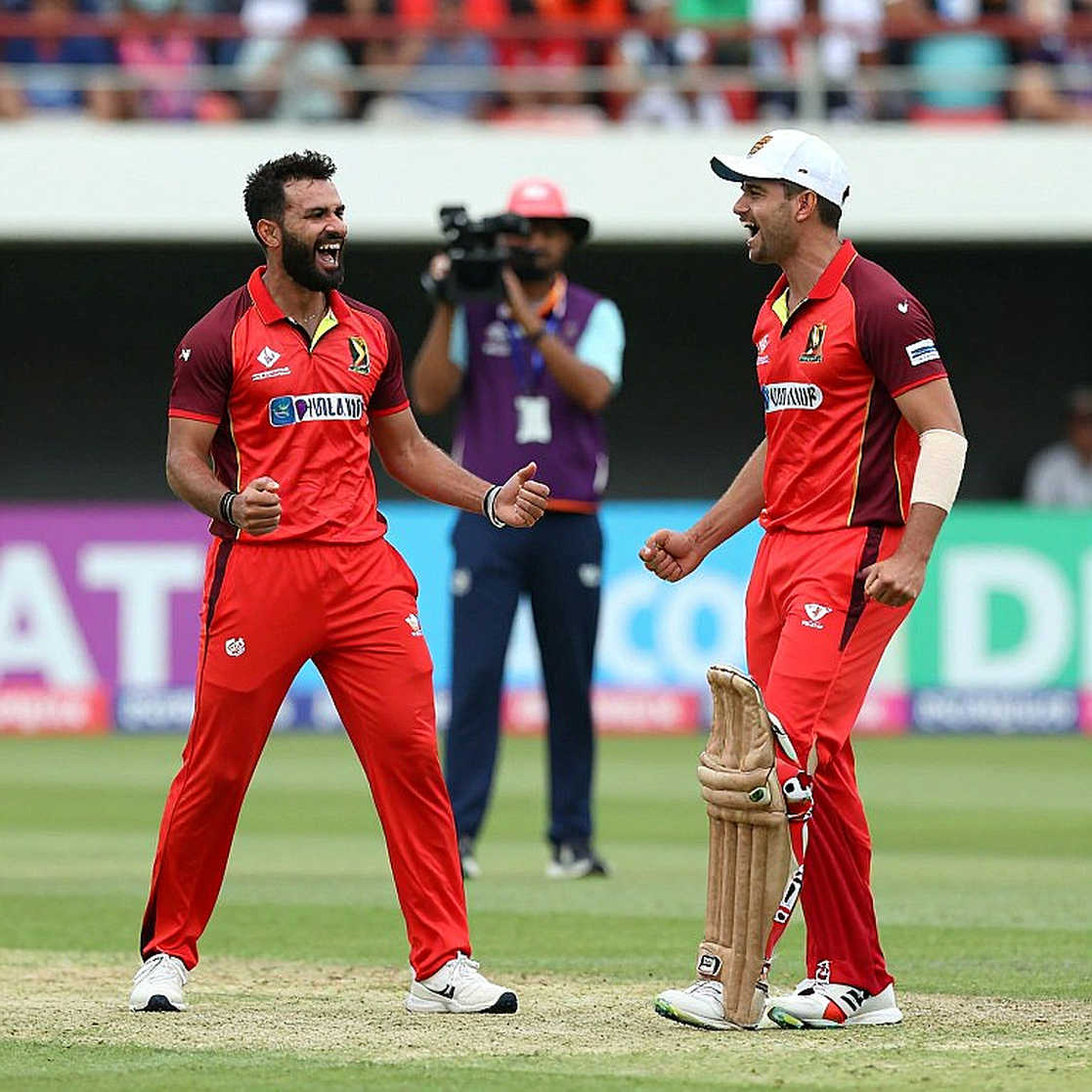
Mitchell Marsh sits beside the microphone, water in front, media manager at his elbow. A journalist stands and asks what exactly is contained in Usman Khawaja's autobiography. In that room on the ground floor of Perth Stadium, cricket was the least discussed subject of the afternoon. I was listening through headphones on my laptop and thinking: an ODI series is opening, and its opening ceremony is a publishing calendar.
Then I opened the squad list. No Pat Cummins. No Mitchell Starc. No Josh Hazlewood. Australia's entire first-choice pace trio absent at once — while Australia's number seven batter is a capped international. Luxury in the batting order, reserves in the bowling order.
The real story is not the book. It is a team placing its least prepared department on its most hostile stage and calling it "preparation".
Three ODIs, then five T20Is. That ratio is a commercial statement, not a scheduling accident. The venue is Perth Stadium, Australia's fastest and bounciest surface, where the ball seams under lights and a wrong length is punished more severely than a good one is rewarded. Whether it is a day-night fixture is not confirmed in the source, so dew and toss advantage remain open questions rather than assumptions.
Australia bat at full strength: Marsh, Head, Connolly, Inglis, Green, Renshaw, Carey. The bowling is a reserve unit: Mahli Beardman, 21, zero ODIs; Xavier Bartlett; Spencer Johnson; plus all-rounder cover in Jack Edwards and Liam Scott. On the captaincy there is an ambiguity in the source, and it should not be smoothed over — one line calls Cummins "Australia captain" addressing the media, another says he is absent and Marsh leads. The coherent reading is that Cummins remains the incumbent and is being rested, with Marsh captaining this series. I am working on that reading at medium confidence; the squad announcement should settle it.
England's picture is inverted. Joe Root anchors the batting, Jofra Archer leads the attack, and both are load-bearing pillars at a stage of their careers where either's absence collapses the structure. Jacob Bethell and Josh Tongue are already ruled out injured. And the recent form is the most alarming data point available: in the Pakistan tri-series England failed to defend 429, and lost another match after a tenth-wicket pair added 89. Those two results are not a batting problem. They are a closing problem.
The politics of the word "preparation"
In eleven years of watching this game I have learned that its two most dangerous words are "preparation" and "process". Both camps are saying it publicly. Australia are "work in progress". England are focused on "what we do between now and that World Cup". It sounds humble, responsible, modern. It also has an operational consequence.
When both sides declare a series preparation, the scoreline stops being a measurement and becomes a mood. Lose and you are learning; win and the process is working. Accountability migrates from the batter to the conference room.
I once called 1,137 Spanish passes a museum exhibit on student radio and predicted France would win the tournament. They did. Since then I have logged every bold claim with a date, a number and a revisit date — my receipt segment. That habit tells me the scoreline here will carry near-zero predictive value for 2027. What carries value is which questions get answered.
Australia have three, all in the middle order. Steve Smith and Glenn Maxwell retired together and the number four and five combination is unresolved; seven viable batters is an advantage only once you pick the right two. The second question is the fifth bowler. The third is whether Carey or Inglis keeps in ODIs and how much room the other gets as a specialist bat. Three matches, three structural decisions. That is the real worth of this series.
Beardman: the format-invalid evidence chain
Beardman is 21. His entire international record is one T20I in Lahore in January: 2/33 at an economy of 8.25. He has not played an ODI.
That is being used to justify an ODI debut at the bounciest venue in Australia, and the chain is structurally invalid. T20 asks a seamer for four overs of maximum effort. ODI asks for ten, across three phases with two different balls. These are not transferable metrics, and neither is Lahore's low bounce — in Lahore a wrong length sits up; in Perth it sails over the keeper's head.
Then there is the detail the report mentions but does not weight: seven months out with a back stress injury. A lumbar stress fracture at 21 is the highest-recurrence injury in fast bowling. Ten overs at Perth is roughly two and a half times the spinal load of a four-over T20 spell on the hardest surface in the country.
Beardman's selection reads as pipeline-testing, not best-XI selection — and the risk has been transferred from the team's ledger to a 21-year-old's shoulder. Marsh's "amazing talent, a ripping young kid" is man-management, not evidence. Expect four to six managed overs in two spells, not a ten-over quota. That single decision rewrites Australia's death-over arithmetic: overs 41 to 50 must be absorbed by Green, Edwards and Scott.
Who bowls the 41st over
I believe fixture congestion is the biggest injury culprit in the sport. No medical team saves a fast bowler from two games a week.
The simultaneous absence of Cummins, Starc and Hazlewood looks less like three separate injuries and more like a coordinated workload block — the trio preserved for a higher-priority assignment, likely Tests or the T20I leg. The report gives no reason, so that is inference, but it makes the whole picture coherent.
England fit the same logic. Bethell and Tongue gone before a ball is bowled is not purely bad luck in a compressed three-ODI, five-T20I window with franchise commitments alongside. What reads as resource management in a boardroom reads as load on a body.
Which is where duty of care bites. If the system can protect three world-class quicks, who benefits from debuting a post-stress-fracture 21-year-old at the highest-bounce venue available? The team, if he succeeds. The bowler carries the cost if he does not.
Australia are full-strength with the bat and reserve-grade with the ball. That asymmetry means the batting has to win the series alone. Naming Edwards and Scott as all-rounders is itself an admission: the frontline attack cannot cover fifty overs.
England's problem is nerve, not talent
I used to think possession was a moral good. Then a counterattack became a sermon.
429 is a huge score. It is not control. England treated 429 as safety the way a football side treats possession as control while the closing twenty minutes are decided by transitions. Cricket's transition window is overs 41 to 50 of the first innings, and 35 to 50 of the chase. England lost there twice — failing to defend 429, then conceding 89 for the tenth wicket.
Two matches, one failure mode. Not a talent issue. A decision-making-under-pressure issue.
Italy is not decoration here. In Euro 2026 I described Barella, Jorginho and Verratti not as a defensive wall but as a pressing metronome. Italy won that tournament by managing risk in the closing phase — precisely the phase England lose. England sit at the centre of football's map and cannot do it; Italy sit at the edge and can. The lesson travels from the periphery inward.
On Root, an unpopular point: the ODI anchor is a contested archetype. Valuable on a difficult surface, a strike-rate drag on a flat one. If Perth is flat, England's first 35 overs crawl and they need a 429-style finish they have just proven they cannot execute. If Perth seams, Root-anchored batting suits the conditions better than Australia's power middle order — and the matchup partially inverts. That conditional is the least discussed tactical hinge of the series.
Archer as "attack leader" tells you the frontline seamers are absent or managed, and his own workload is the most carefully watched in the side. England's plan is simple: Archer attacks, others hold. It works only if the others deliver thirty overs at under 5.5 an over. Recent form says they will not.
The book, the captain and media containment
On Khawaja my position is plain: this is a media-management problem, not a selection problem, because he is not in the ODI squad at all.
There is still a governance signal in it. When a board answers a former player's published allegations through the on-field captain rather than a spokesperson or legal counsel, the message is containment inside the team's media cycle rather than escalation into an institutional process. As strategy it may work. The ethical question stays.
And the book is product. A transfer saga is a folk tale told by agents with Wi-Fi; an autobiography is the same tale told by a publisher with a release calendar. Publishing schedules are fixed months ahead, so alignment with a home series is unlikely to be an accident. Commercially smart. Journalistically a displacement, where a promotional cycle takes the space cricket coverage should occupy.
Note the phrasing: "a long list and full extent of Uzzy's allegations". Multiple, specific, possibly serious. The substance is withheld, so severity and legal exposure cannot be measured. That is the largest information gap in the source. The report itself predicts the controversy takes a back seat within 24 to 48 hours — a prediction with one unstated condition: if the allegations name current players or administrators, the arithmetic changes.
I built a show in empty stadiums, so silence became my co-host. A bilateral ODI series is cricket's empty corridor — low broadcast value, low crowd, low fever — and precisely there you hear what the scorecard hides: who is not getting the 42nd over, who is carrying drinks, which debutant is rested the very next game. That information is more real than the result.
Where I could be wrong
The strongest objection: Perth's bounce may be a gift. Steep carry punishes a wrong length but rewards a full one, and raw quicks have taken three wickets in a first spell at this ground and made every analyst look foolish. If Beardman does that, my "format-invalid" argument survives as process and dies as prediction.
Second, the numbers. The 429 and the 89-run stand come from the report, not from scorecards I have checked. Specific context — DLS, a wet ball, an unusually flat deck — would make England's closing problem situational rather than systemic.
Third, the captaincy. If Cummins is in fact captaining while present, the "captain as institutional shield" reading weakens considerably. The source is ambiguous and I have said so.
Fourth, the uncomfortable one. If both sides genuinely are preparing, my claim that the scoreline is meaningless holds — and then I have no standing to make performance claims about these teams either. At that point I am not a journalist but a viewer who picked the story first.
A takeaway with a date on it
I log every big claim with a date, because that habit took me from campus radio to here.
So, the receipt: Beardman will not complete ten overs in any of the three ODIs. England's overs 41 to 50 will leak more than any other phase across the series, and that phase decides it. Australia win 2-1. The Khawaja story is off the front page by the second ODI.
I will come back after the third and check. If I am wrong, that gets logged the same way.